
LNG, seasonality, and natural gas price volatility
U.S. natural gas markets may be moving to a new equilibrium. In the future, natural gas markets could face more seasonality, higher volatility, and greater demand for seasonal storage. This dynamic is largely attributable to the growing role of liquefied natural gas, or LNG, in U.S. markets. With U.S. LNG exports expected to rise in the post-pandemic period, international markets will increasingly influence U.S. natural gas demand and prices.
LNG Seasonal volatility
Natural gas demand is highly seasonal, with demand typically peaking during extreme temperatures (i.e. summer and winter). In most Northern hemisphere demand markets, such as the US Midwest or Europe, demand peaks in the winter, falls in the spring on temperate weather, picks up again amid summer temperatures and cooling demand, and is again lowered by moderate fall weather. This isn’t true for every market, of course: in Northern hemisphere markets closer to the equator, such as Texas or Mexico, summer cooling demand can sometimes exceed heating demand. Nevertheless, the “shoulder season” of spring and fall typically sees lower demand across the U.S., OECD Europe, and OECD Asia.
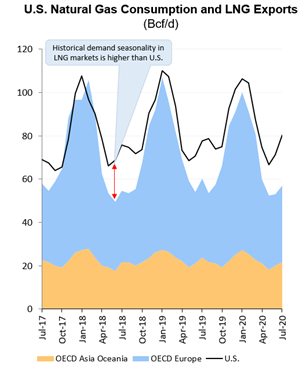
As you can see above, OECD Europe (which includes every EU country, plus the U.K., Iceland, Liechtenstein, Norway, and Switzerland) shows more seasonal demand volatility than the United States. OECD Asia Oceania actually shows less seasonal volatility than the U.S., but that is largely attributable to Australia/New Zealand effects: Japan and South Korea have an LNG seasonal demand profile similar to Europe. Overseas demand for U.S. LNG exports therefore is highly seasonal and peaks in winter.
Implications of winter demand
LNG makes up an increasing proportion of growing total U.S. natural gas demand. In 2016, when Cheniere first began exporting liquefied volumes from Sabine Pass, U.S. LNG exports only accounted for 1% of all U.S. demand. By 2020, volumes stood at 8% and would have been much higher, but for the pandemic. By 2027, we believe that about 20% of all U.S. natural gas demand will be attributable to LNG, largely due to LNG export volumes recovering post-pandemic.
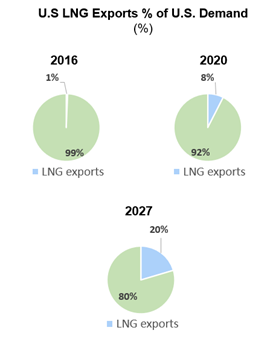
As LNG volumes account for a growing share of U.S. natural gas demand, we predict that inter-seasonal storage needs will become increasingly important for U.S. LNG exporters. We expect this to increase seasonal spreads in the natural gas markets and potentially accentuate gas price volatility.
Summer hurricane season?
Was the 2020 hurricane season a fluke, or a new reality that U.S. Gulf Coast LNG exporters must learn to live with? Hurricane seasons appear to be growing more intense on climate change. The graph for Sabine Pass LNG feed gas flows below shows how disruptive hurricanes can be for LNG exporters.
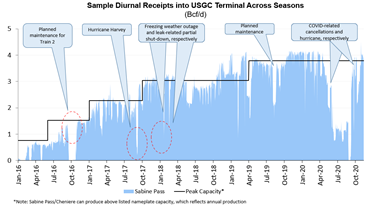
Cameron LNG’s volumes fell even further. If hurricane seasons persist, natural gas storage optionality will become critical for exporters and offtakers seeking to avoid sudden production outages.
Not quite a global gas market, but closer
Many factors will likely prevent a truly global gas market from ever emerging, but Henry Hub and other U.S. natural gas indexes are likely to become more international, and possibly more volatile. With international LNG demand coinciding with U.S. winter demand, we could see persistent winter pricing “peaks” in the future.