
With WTI and Brent crude prices trading in the mid-80s and OPEC+ failing to deliver planned supply hikes, talk of a release from the U.S. Strategic Petroleum Reserve (SPR) is getting louder and louder. While we think triple-digit prices are a low probability event (not to mention highly unsustainable), and SPR inventory drawdown is significantly more likely. While a U.S. SPR release would likely be limited and have only modest implications for prices, it could become more significant if it: 1) produces coordinated inventory sales from other major oil consumers, such as the EU and Japan; 2) leads to some settlement of Iran/Venezuela sanctions, or 3) triggers a supply response from the U.S. and/or OPEC+ producers.
A (very) brief history of the SPR and why it matters
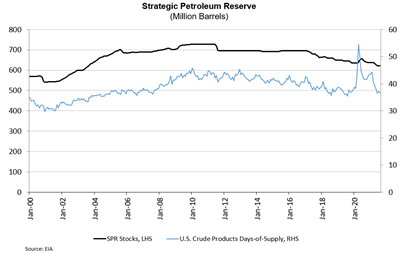
The U.S. established a strategic petroleum reserve after the 1970s oil crisis revealed that petroleum supply shortages, even temporary ones, could metastasize into major economic and geopolitical consequences. During the 1990s, however, the SPR became less relevant amid very weak oil prices. The U.S. then gradually expanded SPR stocks in the 2000s due to supply uncertainties surrounding the War on Terror and the invasion of Iraq, and slowly drew down inventories in the mid-2010s as the shale revolution and domestic production relieved some upstream supply/import pressures. Finally, SPR inventories and crude products (i.e. gasoline, diesel, jet fuel, etc) days-of-supply surged in early 2020 due to the COVID pandemic, falling transportation mobility, and cratering oil prices; this trend reversed by March 2021 as vaccinations sharply lifted consumer demand.
Rebounding crude products demand
U.S. and international oil demand has come back with a vengeance in 2021 and is once again flirting with record levels. Indeed, were it not for $80+ oil prices (and the Delta coronavirus variant, of course), we believe that crude product supplied would have reached historical highs.
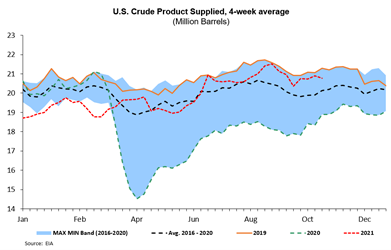
This aggregation of all crude products doesn’t provide the full picture, however: gasoline and diesel stock levels are well below 5-year averages, while jet fuel inventories are still slightly elevated due to the slow return of jet travel. Unsurprisingly, gasoline and diesel prices are at their highest levels since 2014 – at least as measured in nominal dollars. An SPR release could therefore expand crude supply for refineries and relieve some pressure on consumers.
An SPR release would only have a limited impact
The significance of an SPR release would vary with the magnitude, release schedule, and timing of a sale. According to the DOE, the SPR can deliver oil to market within 13 days and has a maximum withdrawal rate of 4.4 million barrels per day for up to 90 days. However, a full-capacity release is extremely unlikely: we suspect that no more than 100 million barrels would enter the market. While that’s a lot of supply, certainly, it’s a drop in the bucket compared to the total 2021 world annual crude demand, which will likely come in around 35-36 billion barrels.
Unless…
An SPR release could matter at the margins, however, if it’s coordinated with other major oil consumers, such as the EU and Japan. Since the IEA requires each member country to hold at least 90 days of net oil imports, except in cases of severe oil supply disruption, a coordinated crude release could add significant (but not overwhelming) volumes to the market, pushing down prices.
But a supply release wouldn’t be that simple, as OPEC+ and other market actors get a vote. OPEC+ might respond to an SPR withdraw by cutting production. Moreover, an SPR release could actually harm U.S. crude producers, since WTI prices would likely face pressure from a major sale of light crude grades from the SPR. Indeed, the DOE might only release heavier crude grades to protect U.S. domestic suppliers, which tend to produce light, sweet crude.
There are a lot of moving pieces to the SPR story. We expect it won’t be resolved for some time – and returning oil supply from Iran and/or Venezuela (or OPEC+) would have a much more significant impact on prices than a one-time inventory release. Assuming that COVID continues to gradually recede into a background risk for vaccinated individuals, however, we expect that prices will largely be driven by supply-side factors.