
Closure of ERCOT coal electricity generation capacity is only a matter of timing due to a confluence of economic and social trends. Despite a temporary recovery in 2021 coal generation (thanks to soaring gas prices), we expect the most polluting electricity generation source to become increasingly uncompetitive compared to natural gas and renewables in the long run. Moreover, ESG concerns – including, yes, in ERCOT – will increasingly threaten coal. In this article, we examine ERCOT’s coal segment and determine which plants face the most immediate risk of closure. We find that two coal plants with a capacity of ~4.2 GW are at severe risk of permanent closure, potentially opening opportunities for alternative generation sources such as natural gas, wind, solar, and batteries.
ERCOT coal generation: trending downwards
In a trend seen nearly everywhere in the U.S., ERCOT coal generation fell sharply as the shale revolution made natural gas the most affordable fuel source for power burn. The U.S. coal mining production peaked in 2008, the number of U.S. producing mines fell more than 60% from 2008 to 2020, and coal generation at utility-scale facilities is down 55% since 2011. In EROCT, coal generation from 2014-2020 fell by 45% to just under 70 million Gigawatt hours (GWh). As we’ve discussed elsewhere, U.S. (and ERCOT) coal generation in 2021 has seen a slight rebound due to coal inventory gluts, elevated natural gas prices, and robust economic/electricity demand.
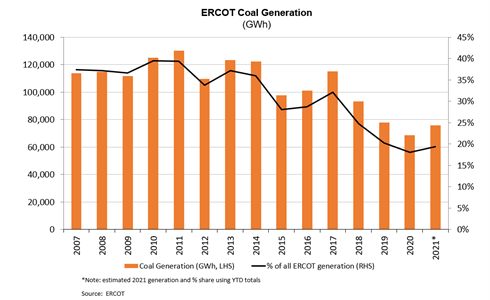
ERCOT coal generation faces severe macro and local headwinds over the medium-term, however. At the national level, investors are terrified of coal’s ESG and financial risks; most analyses find that coal is already uncompetitive vis-à-vis natural gas and renewables; U.S. coal producers are dependent on British Columbia, Virginia, and Maryland export ports; and some kind of penalty for greenhouse gas (GHG) emissions appear more probable over the medium-term. Local market conditions could also weigh heavily on ERCOT coal producers and force several closures.
Coal landscape: plant-by-plant
There are 10 operating coal plants of significant size in the ERCOT market, with ~14.3 GW of combined capacity. All are located in eastern Texas. As you can see below, many of the coal plants flirted with shut-down capacity utilization factors in 2020 but have since seen some recovery in a generation.
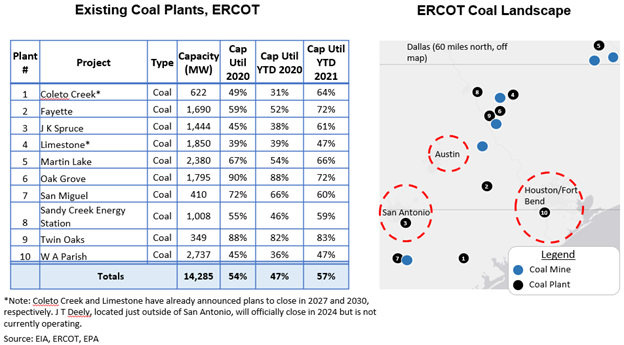
Which plants are most likely to shut down? Well, for starters, Coleto Creek and Limestone have already announced plans to shut down by 2027 and 2030, respectively. The J T Deely plant (not pictured) has already stopped operating. We think at least two other plants are at a very high risk of closure within the next five years. W A Parish and J K Spruce coal plants struggled during the worst days of the pandemic and face an uncertain future due to economics and ESG trends.
While we will have to see how the post-pandemic, post-Uri ERCOT market plays out, these two plants will face severe ESG headwinds due to their proximity to residential markets. Fort Bend County is the second or third-highest county by income in the state of Texas, and we have a hard time believing that one of the wealthiest counties in Texas will continue to tolerate an ugly pollutant that weighs on local property values. Similarly, the J K Spruce plant, located less than 20 miles from San Antonio’s River Walk, will likely face a consumer backlash.
Coal’s ERCOT future: When, Not If
Many factors (such as local coal production, “midstream” rail and supply sourcing, and end-user demand) will determine how rapidly coal capacity closes. If you’d like a more comprehensive assessment, drop us a line at info@enkonenergy.com. Nevertheless, the writing is on the wall: coal is on its way out of the ERCOT (and the U.S.) fuel mix. It’s only a matter of timing.