
Natural gas and electricity markets are now deeply intertwined, yet they continue to operate under fundamentally distinctive design principles. This structural misalignment has become increasingly visible and consequential as gas-fired generation has emerged as a cornerstone of power system reliability. A robust gas procurement strategy for datacenters driven should address these misalignments to attain 99.999% desired reliability. Gas procurement should be designed around the expected dispatch regime and the region’s deliverability constraints, not around generic contract templates.
Historically, natural gas systems were built to serve relatively predictable demand, primarily from local distribution companies (LDCs) supplying heating load. These systems rely on long-term contracting, scheduled nominations, and steady, “ratable” flows of gas throughout the day. In contrast, electricity markets were designed for real-time balancing, where supply and demand must be matched instantaneously. As gas-fired generation has grown into a flexible balancing resource for power systems, these two distinct frameworks have become tightly coupled without ever being fully harmonized.
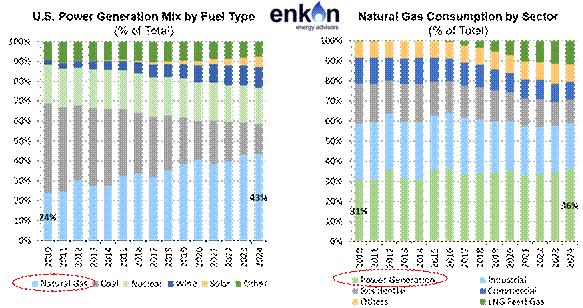
Growing Physical and Market Interdependence
The rise of gas-fired generation has fundamentally reshaped demand patterns on the gas system. Power plants now represent a large, highly variable, and weather-sensitive source of demand. During extreme conditions, particularly winter storms, this demand can surge dramatically, often coinciding with peak residential and commercial heating needs. The result is direct competition for pipeline capacity and storage withdrawals at precisely the moments when system flexibility is most critical. This physical interdependence is mirrored in market dynamics. Natural gas price formation increasingly reflects the behavior of the power sector, particularly during periods of system stress. At the same time, electricity prices are heavily influenced by gas availability and deliverability constraints. In effect, each market is now partially governed by the limitations of the other.
Stress Events Reveal Structural Weaknesses
Severe winter storms have exposed the fragility of this relationship. Gas-fired generators, which are relied upon to ensure grid reliability during peak demand periods, often face significant barriers to securing fuel when it is most needed. These challenges stem not from a lack of physical resources alone, but from the institutional and contractual frameworks that govern gas markets. Core features of the natural gas system including long-term contract structures, rigid scheduling practices, and limited mechanisms for reallocating capacity, are poorly suited to the flexible, time-sensitive needs of electricity generation. As a result, generators may be unable to access transportation capacity even when it exists, contributing to forced outages and broader system disruptions during extreme events.
Contracting and Economic Barriers
One of the most significant challenges lies in the mismatch between pipeline contracting structures and generator needs. Firm transportation contracts, which provide priority access during periods of system stress, require long-term commitments and substantial fixed reservation charges. For many generators, particularly merchant power producers operating in energy-only markets, these costs are difficult to justify or recover. Regulated rate design further exacerbates this issue. Under the prevailing “straight-fixed variable” model, pipelines recover the majority of their fixed costs through monthly reservation fees. This creates a high fixed-cost burden that is economically inefficient for generators with highly variable and seasonal demand profiles. Unlike regulated utilities, merchant generators lack guaranteed cost recovery mechanisms, making long-term commitments to firm capacity financially unattractive.
Credit requirements also pose a barrier to entry. Pipelines typically require shippers to demonstrate creditworthiness or post significant collateral—often equivalent to several months of reservation charges. For merchant generators with exposure to volatile power markets, these requirements can be prohibitive, limiting their ability to participate in the primary capacity market.
Operational Misalignment: The Ratable Flow Constraint
Even when generators secure transportation capacity, operational constraints can limit its usefulness. Standard firm contracts are built around the concept of ratable flow—the delivery of a constant volume of gas each hour over a 24-hour period. This paradigm is fundamentally at odds with the operational realities of power generation, where output—and therefore fuel demand can vary significantly within a single day. During periods of peak electricity demand, generators may need to consume large volumes of gas over a short timeframe. However, ratable flow requirements restrict their ability to do so, particularly during system stress when pipeline operators enforce strict compliance through operational flow orders (OFOs). In some cases, generators are effectively required to purchase far more gas than they need in order to meet these requirements, leading to inefficiencies and elevated costs. While some pipelines offer more flexible services—such as no-notice or enhanced hourly flexibility products, these options typically come at a premium, further discouraging adoption.
Limited Effectiveness of Secondary Markets
In theory, secondary markets for pipeline capacity should help address these challenges by allowing capacity to flow to its highest-value use. However, in practice, these markets have not provided meaningful relief for generators. Trading volumes in capacity release markets remain relatively low, even during periods of system stress. Structural features such as recall rights, service prioritization rules, and regulatory preferences for certain types of transactions reduce the attractiveness and effectiveness of these markets. As a result, capacity is not reallocated to generators at the scale or speed required during critical periods. Similarly, spot markets for natural gas become less transparent and liquid during extreme events. Trading activity often shifts from centralized exchanges to bilateral, over-the-counter transactions, reducing price visibility and increasing the potential for market power among participants with firm pipeline access.
Conclusion
The growing interdependence between natural gas and electricity systems is both inevitable and beneficial—but only if the underlying market structures evolve accordingly. The current misalignment between these systems introduces inefficiencies, increases costs, and, most importantly, undermines reliability during periods of stress. Gas procurement should be designed around the expected dispatch regime and the region’s deliverability constraints, not around generic contract templates.
How is your organization thinking about sourcing natural gas to meet your power generation needs?
– Amol Wayangankar
If you are interested in developing a robust gas sourcing strategy and execution plan for your power generation needs, please contact us at info@enkonenergy.com. We encourage you to subscribe to our articles to get weekly articles via email.
Enkon Energy Advisors is a boutique consulting firm specializing in oil & gas, and energy transition since 2012. We bring deep expertise in a range of markets including natural gas, NGLs, Oil, LNG, and Energy Transition where we provide commercial and market advisory to investors, energy companies, and project developers with consulting services, subscription reports, and analytics, with the goal of delivering commercially actionable outcomes to our client.